

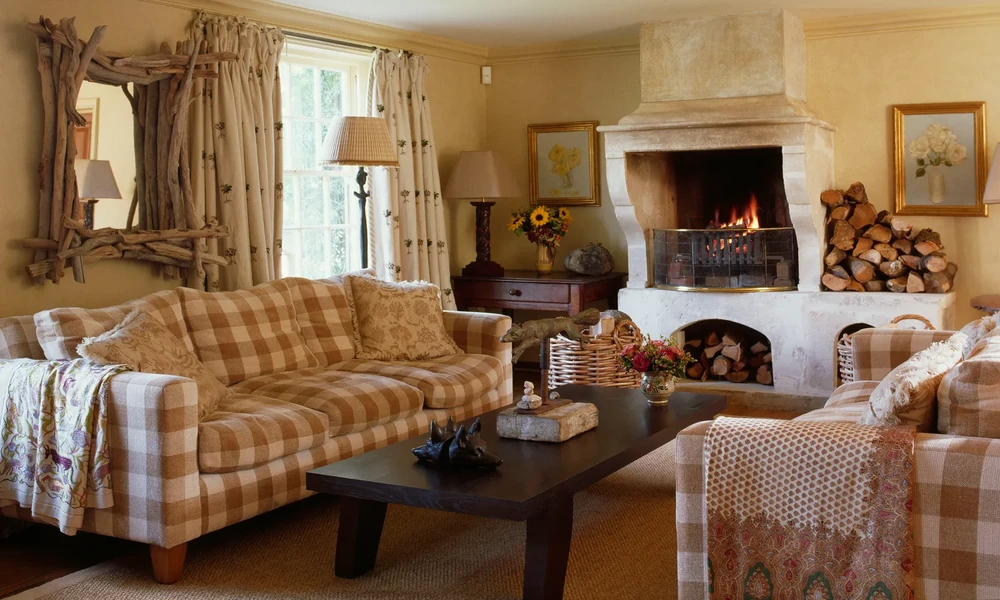
Nobody planned for wrought iron, hand-painted ceramics, and faded California art prints to become the most talked-about interior trend of the decade. Yet walk into any thoughtfully decorated home right now and you’ll probably find at least one piece nodding to pre-war California. This is not nostalgia for nostalgia’s sake. There’s a real logic to it.
The California vintage aesthetic – rooted in the Spanish Colonial Revival, Mission craft traditions, and the sun-soaked studios of 1930s Hollywood – hits a specific emotional register that mass-produced furniture simply can’t touch. It feels earned. It feels like someone actually lived with it. And in a moment when algorithmically curated interiors all look identical, that distinction matters enormously to the people who care about their spaces.
What “California Vintage” Actually Means
The term gets used loosely, so it’s worth being precise. California vintage design spans roughly 1910 to 1960, with the richest material culture clustered in the 1920s through 1940s. It draws from three converging influences: Spanish and Mexican craft traditions brought north through the missions and Monterey-style furniture workshops; the Bauer and Catalina pottery movements, which produced some of the most vivid ceramic glazes in American history; and the glamour of Golden Age Hollywood, which gave the whole aesthetic a cinematic confidence that European antiques rarely carry.
Monterey furniture is the clearest example. Produced primarily between 1929 and 1943 by the Mason Manufacturing Company and its contemporaries in Southern California, Monterey pieces are characterized by heavy carved wood, painted finishes in Spanish greens and reds, hand-tooled leather, and wrought iron hardware. A single 1930s Buckaroo chair or a rope-seat club chair communicates something about craft and place that a Scandinavian flat-pack simply cannot. That specificity is the whole point.
The Numbers Behind the Nostalgia
Interior trends don’t survive purely on aesthetics. They survive because buyers show up with actual money. According to the U.S. Bureau of Labor Statistics Consumer Expenditures report for 2024, the average American household spent roughly $648 on furniture in that year alone, representing one of the most consistent discretionary categories in the household budget year over year. That baseline spending tells you the market for furnishings is enormous even in cautious economic climates.
Where that money flows within the market has shifted. Vintage and antique pieces are capturing a growing share of total furnishings spending, driven by buyers who want objects that carry provenance rather than a barcode. The collectibles category, which includes art and antiques, reflects this appetite clearly.
| U.S. Collectibles Segment | 2025 Revenue Share | Key Driver |
|---|---|---|
| Art & Antiques | 34.21% | Nostalgia, tangible-asset demand |
| Numismatics | ~12% | Collector communities and auctions |
| Trading Cards | Fastest-growing segment | Youth crossover and sports culture |
| Memorabilia | Significant minority share | Pop culture licensing |
Source: Grand View Research, U.S. Collectibles Market Report, 2025. Art and antiques commanded a 34.21% revenue share of the U.S. collectibles market in 2025, the largest of any category, driven by what Grand View Research describes as “nostalgia-driven demand for rare, culturally significant pieces.”
The 3 Rs of California Vintage: A Framework for Buying Smart
Here’s where I’ll give you something a bit more useful than just trend commentary. After spending time with serious collectors and vintage dealers, a clear decision filter emerges for anyone trying to build a coherent California-inspired room. Call it the 3 Rs: Region, Range, and Rarity.
Region means confirming the piece’s geographic origin. Genuine California vintage decor was made in California, usually in workshops concentrated around Los Angeles, Long Beach, and the San Fernando Valley. A “Monterey-style” nightstand made in Ohio in the 1960s has its own appeal, but it’s a reproduction of a regional sensibility, not the real article.
Range means understanding the era’s span. The 1920s pieces lean more heavily on Spanish Colonial ornament. By the late 1930s, the lines simplify slightly and the painted finishes become more confident. By the 1940s, wartime material restrictions shaped production in ways that are legible if you know what to look for. Buying across the range gives a room depth; buying only the most famous pieces gives you a museum.
Rarity is the hardest criterion and the most important. Catalina Island pottery, early Bauer glazes, pre-war D&M tiles, signed art prints from Touring Topics covers: these items were produced in genuinely limited quantities and their supply does not grow. A rarer piece holds its visual authority in a room in a way that common reproductions never will.
How to Build the Look Without Starting From Scratch
Most people won’t rebuild a room around antiques. Most people have an existing space and want to introduce the aesthetic through specific anchoring pieces. Here’s how to approach that without making it feel like a costume.
- Start with art before furniture. A single 1930s California art print or an Old Hollywood painting establishes the color palette and mood for everything else in the room.
- Pick one ceramic statement. A Catalina or Bauer pottery piece on a shelf does more work than six generic decorative objects.
- Let metal carry the structure. Wrought iron lamp bases, table bases, or small architectural details tie the California tradition together without requiring a wholesale furniture purchase.
- Use textiles to soften. Hand-tooled leather, woven rugs, and natural fiber upholstery all appear in the California vintage canon and work in contemporary rooms without friction.
For sourcing, in-person dealers who specialize in verified California material are the only reliable way to know what you’re actually buying. Curated shops in Southern California, particularly in Long Beach and the surrounding area, tend to hold the deepest inventories of authenticated Monterey furniture, pre-war pottery, and period art. A shop carrying a thoughtfully assembled golden hour decor collection signals that someone has already done the authentication and curation work on your behalf, which is worth paying attention to when you’re spending serious money on a 1928 rope-seat chair.
“The pieces that defined California in the 1930s were never meant to be precious. They were meant to be lived in, used, and passed down. That’s exactly why they look right in a modern room.” – A view widely held among Southern California vintage dealers and collectors of the Monterey tradition.
Why This Trend Isn’t Going Anywhere
California vintage design has structural staying power for two reasons that have nothing to do with trend cycles. First, the supply of authentic pieces is genuinely finite and shrinks every year. Second, the cultural associations are deep and broadly understood: Old Hollywood, the California dream, mid-century beach culture, and the Mission craft tradition all pull on the same emotional thread across generations. Those are not the conditions that produce a trend. They’re the conditions that produce a canon.
Mass-market interiors will always have their moment. But the rooms people actually photograph, share, and talk about tend to have at least one piece that couldn’t have come from a warehouse. California vintage fills that role better than almost anything else on the market right now.
If your space feels anonymous, that’s probably the diagnosis and also the prescription: one authentic, regionally specific object that tells a story mass production never could.
