

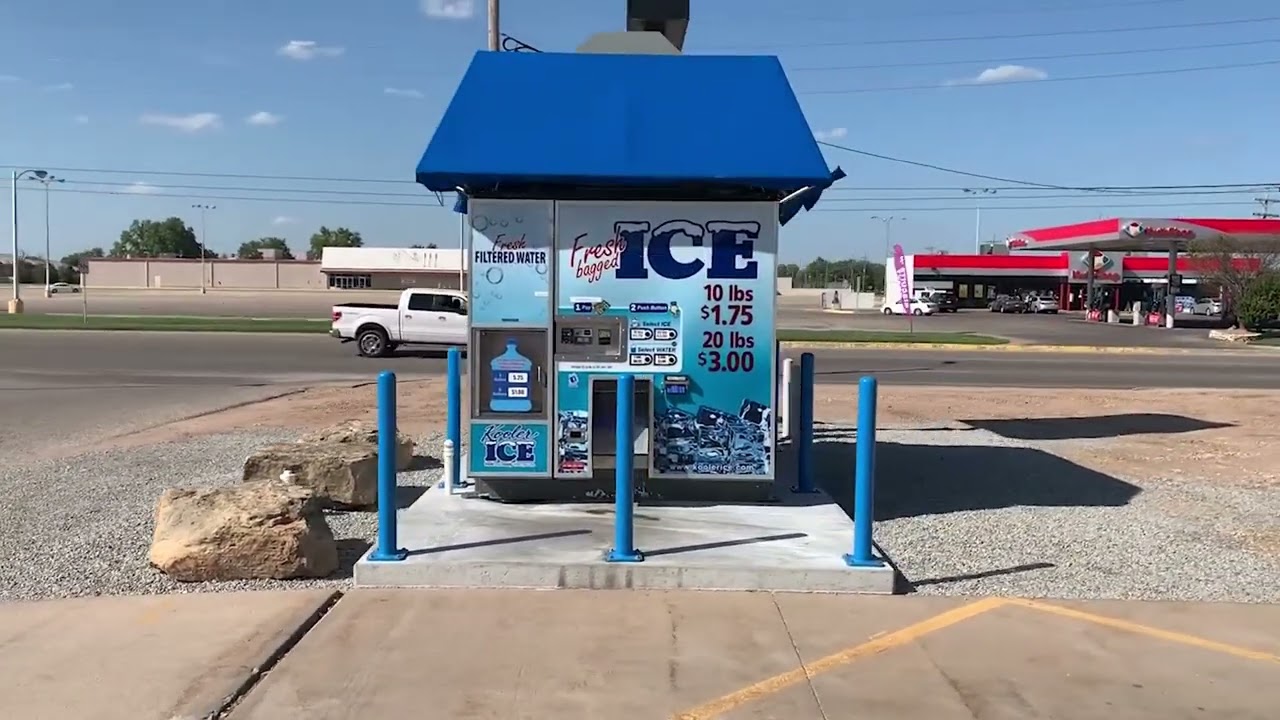
An ice machine business generates passive income by placing ice vending machines or bagged ice dispensers in high-traffic locations such as gas stations, convenience stores, marinas, campgrounds, and grocery store parking lots. The machine sells ice 24/7 with minimal human involvement. You earn revenue from each bag or block sold, while the location owner typically earns a commission.
It’s one of the more straightforward vending-style businesses available: relatively low tech, steady demand, and scalable by simply adding more machines. But like any real business, the economics only work if you choose locations wisely, manage maintenance proactively, and understand the upfront investment required.
Types of Ice Machines for This Business Model
| Type | How It Works | Best Locations | Avg. Revenue Potential |
|---|---|---|---|
| Bagged Ice Dispenser (IceHouse/Twice the Ice) | Customer inserts payment; machine bags and dispenses ice automatically | Gas stations, grocery stores, marinas | $1,500-$4,000/month per machine |
| Block Ice Machine | Produces large ice blocks; customer selects size | Bait shops, fishing marinas, outdoor recreation | $800-$2,500/month per machine |
| Bulk Ice Vending Kiosk | Large kiosk – customer fills their own cooler | Campgrounds, sporting venues, beaches | $1,200-$3,500/month per machine |
| Cubed Ice Vending Machine | Dispenses cubed or crushed ice into customer’s container | Gas stations, convenience stores | $1,000-$3,000/month per machine |
The Business Model Explained
Here’s how the money flows in a typical ice machine operation:
- You own the machine and are responsible for maintenance, water hookup, and restocking supplies.
- The location owner (gas station, store) provides the space, electricity access, and foot traffic.
- You pay the location owner a monthly fee or commission – typically 10-20% of gross revenue or a flat $100-$300/month.
- You keep the remaining revenue after commissions, supplies, maintenance, and loan repayments.
The appeal: machines work nights, weekends, and holidays without you. A well-placed machine with steady traffic can run largely unattended for weeks at a time.
Startup Costs Breakdown
| Item | Low Estimate | High Estimate | Notes |
|---|---|---|---|
| Ice vending machine (new) | $20,000 | $40,000 | Brands: Everest, Twice the Ice, IceHouse America |
| Ice vending machine (used/refurb) | $8,000 | $18,000 | Check warranty and service history carefully |
| Installation & hookup | $500 | $2,000 | Water line, electrical, concrete pad if needed |
| First 3 months of location fees | $300 | $900 | Flat fee or commission structure |
| Business formation (LLC) | $50 | $500 | State-dependent filing fees |
| Insurance (annual) | $800 | $2,000 | General liability + equipment |
| Marketing / signage | $200 | $1,000 | Machine wrap, roadside signage |
| Reserve fund | $2,000 | $5,000 | For repairs, downtime, slow months |
| TOTAL (1 machine) | $31,850 | $71,400 | Used machines lower entry point significantly |
Monthly Revenue & Profitability Estimate
Revenue per machine varies widely based on location traffic, local climate, and whether you’re in a tourist area or year-round market. Here’s a realistic model for a single machine:
| Item | Conservative | Base Case | Strong Location |
|---|---|---|---|
| Bags sold per day | 15 | 30 | 50 |
| Price per bag | $2.00 | $2.50 | $3.00 |
| Gross daily revenue | $30 | $75 | $150 |
| Gross monthly revenue | $900 | $2,250 | $4,500 |
| Location commission (15%) | -$135 | -$338 | -$675 |
| Electricity & water | -$80 | -$120 | -$180 |
| Maintenance reserve | -$100 | $-100 | -$100 |
| Loan payment (if financed) | -$400 | -$400 | -$400 |
| Net monthly profit | $185 | $1,292 | $3,145 |
Best Locations for Ice Machines
| Location Type | Why It Works | Season |
|---|---|---|
| Gas stations with high traffic | Impulse buys; customers already stopping | Year-round |
| Marinas & boat ramps | Fishermen, boaters – ice is essential | Spring-Fall |
| Campgrounds & RV parks | Captive market; no competing options nearby | Spring-Fall |
| Sporting events & stadiums | High volume, short time windows | Seasonal |
| Beaches and lake access points | Hot weather + outdoor activity = consistent demand | Summer-heavy |
| Rural areas with no nearby stores | Less competition, loyal repeat customers | Year-round |
Honest Pros and Cons
| Pros | Cons |
|---|---|
| True passive income once machine is running | High upfront cost ($20K-$40K per machine) |
| Scalable – add more machines to grow income | Machines break down; maintenance is unavoidable |
| Low day-to-day time commitment | Revenue is highly weather/season-dependent |
| Recession-resistant – ice is a basic need | Finding and securing good locations takes time |
| No employees required initially | Theft and vandalism are real risks |
How to Get Started: Step-by-Step
- Research your local market – identify 10-15 high-traffic potential locations.
- Approach location owners with a simple proposal: you place the machine, they earn passive commission.
- Choose a machine brand – Twice the Ice, IceHouse America, and Everest Ice and Water are industry leaders.
- Secure financing if needed – SBA loans, equipment financing, or personal savings.
- Form your LLC and get general liability insurance before installation.
- Install the machine, connect water and power, and set pricing.
- Monitor via remote telemetry (most modern machines offer this) and check in weekly at first.
- Once machine is profitable, reinvest earnings into a second location.
Top Machine Vendors to Know
| Brand | Machine Type | Price Range | Website |
|---|---|---|---|
| Twice the Ice | Bagged & bulk ice vending | $25,000-$45,000 | twicetheice.com |
| IceHouse America | Bagged ice dispensers | $20,000-$40,000 | icehouseamerica.com |
| Everest Ice and Water | Bulk/cubed ice kiosks | $18,000-$38,000 | everesticemachines.com |
| Ice Trax | Bagged ice dispensers | $22,000-$42,000 | icetrax.com |
An ice machine business won’t make you a millionaire overnight. But a portfolio of 5-10 well-placed machines can generate $5,000-$20,000/month in net income with very limited daily involvement. It’s one of the most genuinely passive small business models available – if you choose your locations well.
